PeCHIVReT at the International Conference on AIDS and STIs in Africa (ICASA 2025)
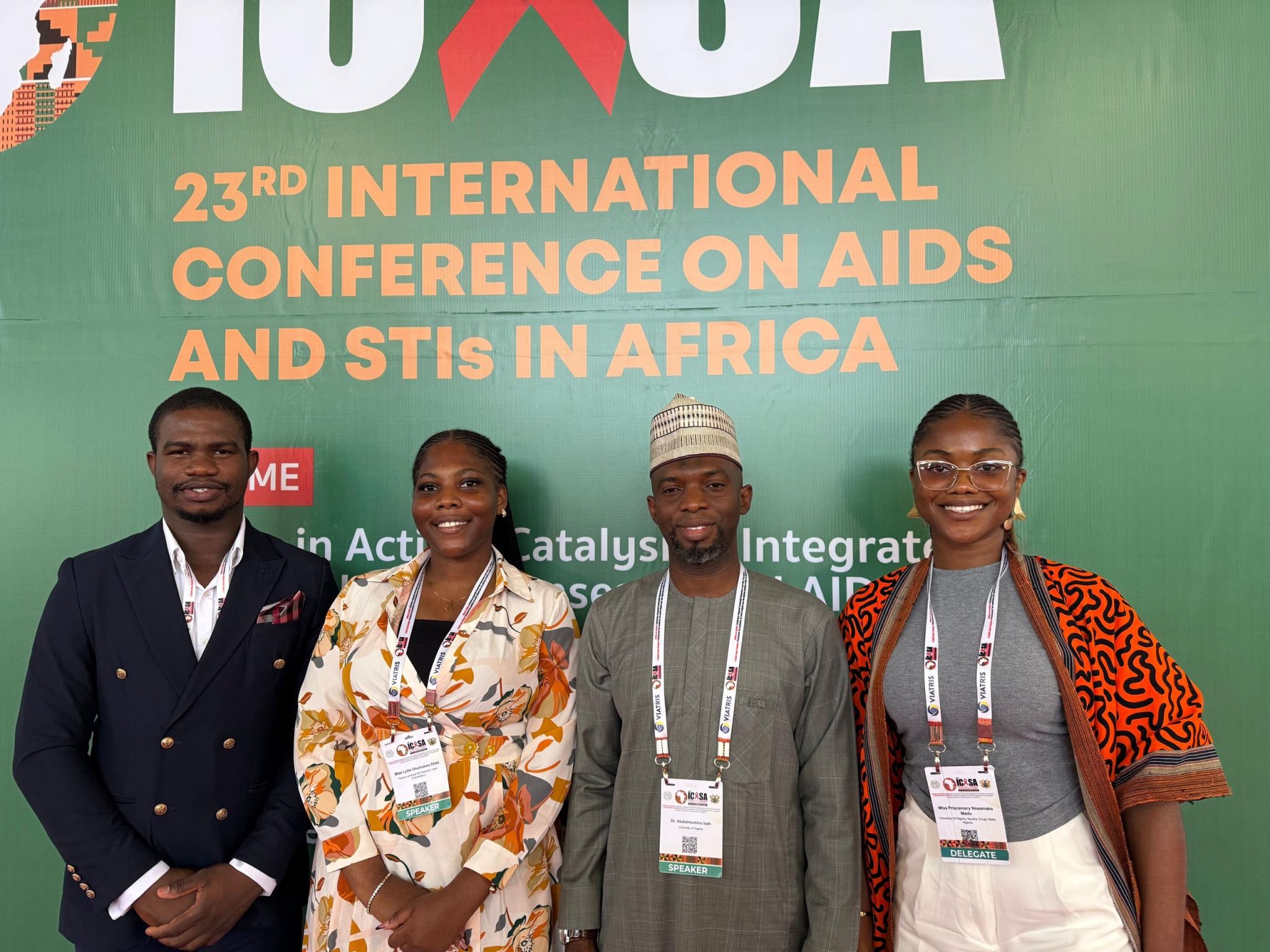
There is something special about seeing research move from a document on a screen to a conversation in a room filled with people who care about the same questions.
For the Person-Centered HIV Research Team (PeCHIVReT), that was one of the things that made the International Conference on AIDS and STIs in Africa (ICASA) 2025 memorable. Held in Accra, Ghana, ICASA brought together researchers, healthcare professionals, policymakers, advocates, young people and other stakeholders working across HIV, STIs, TB, malaria and health systems in Africa.
This year's theme was “Catalyzing Integrated Sustainable Responses to End AIDS, TB & Malaria.” For our team, it was a theme that connected closely with the kind of research we are interested in doing at PeCHIVReT, research that looks beyond whether an intervention works and asks whether people can actually access it, afford it, understand it and use it.
PeCHIVReT was represented in Accra by our Principal Investigator, AbdulMuminu Isah, PharmD, PhD, FPCPharm (Infec. Dis.) CSCA, alongside team members Uzochukwu Chima, Emmanuella Benson, PharmD, Lydia Efobi, and Priscamary N Madu. We went to share some of our research, but we also went to listen.
And there was a lot to listen to.
Sharing what we have been learning
One of the highlights for our team was seeing our members present research in different areas of HIV prevention, treatment and care.
Emmanuella Benson, PharmD presented research looking at the possible neuroprotective role of Vitamin E in isoniazid-induced peripheral neuropathy, particularly in the context of HIV-TB comorbidity.

Peripheral neuropathy is a problem that can affect people taking isoniazid for tuberculosis. The study explored whether Vitamin E could help reduce the effects of this treatment-related nerve damage. While this was laboratory research conducted in rats, it adds to the wider effort to find ways of making treatment safer and improving the experience of people who have to manage both HIV and TB.
Another important conversation at the conference was around PrEP and what it takes for people to actually use HIV prevention services.
Priscamary N Madu presented our study on the willingness of postgraduate students at a Nigerian university to pay for different PrEP options. The findings were interesting because they showed that many participants were willing to pay for PrEP, with a strong preference for long-acting injectable options.

But willingness to pay did not mean that the options were affordable.
The amounts participants were willing to pay were below the current market prices. Cost and stigma were among the main barriers, while effectiveness, peer influence and insurance support could encourage uptake.
This is an important distinction in HIV prevention. We can have a prevention option that people want to use, but if the price is beyond what they can afford, that option remains out of reach.
It means that conversations about introducing new HIV prevention methods must also include conversations about financing, insurance and affordability.
Our Principal Investigator, AbdulMuminu Isah, also presented research on the role of people living with HIV in HIV prevention.

His study looked at whether people living with HIV would recommend PrEP to their HIV-negative partners. The findings showed that they were willing to do so, particularly when their partners had consistently supported them throughout their treatment journey.
This finding made an important point about the way we think about HIV prevention. People living with HIV are not simply people receiving treatment. They can also be partners in prevention. Their experiences and relationships can help shape how HIV prevention works within families, partnerships and communities.
For us at PeCHIVReT, this is closely connected to what person-centred care means. It means listening to people and recognising the knowledge they already have from living through these experiences.
Uzochukwu Chima brought another perspective to HIV prevention through a scoping review on the factors that could influence people's acceptance of future HIV vaccines.

His research found that vaccine effectiveness was the factor that most strongly influenced acceptability, followed by affordability and safety. Side effects and dosing schedules also mattered.
This tells us something important about the future of HIV vaccines. Developing a vaccine is only one part of the work. People also need to understand it, trust it and be willing to use it.
Even a vaccine that is not completely effective could still play a role in reducing HIV transmission if it is introduced in a way that communities understand and accept.
Then there was research that brought the conversation even closer to communities that often face several barriers at once.
Lydia Efobi presented research on the relationship between education, PrEP uptake and HIV testing among female sex workers living in an IDP camp in Southern Nigeria.

One of the findings stood out. About 70% of the women had little or no formal education. Among women with no formal education, there was no reported uptake of HIV testing, even though HIV services were available nearby.
This finding shows why simply saying that a health service is “available” does not tell the whole story.
A service can be nearby and still be difficult to use.
If health information is difficult to read, if signs are not written in languages people understand, if people are unsure about where to go or if they do not have someone to guide them through the process, availability alone is not enough.
The findings point towards practical solutions such as using more visual and audio health information, improving signage in local languages, taking services directly to communities through mobile clinics and strengthening peer support.
These are not complicated ideas. But they require us to pay attention to what people actually experience when they try to access care.
What we learned beyond our own presentations
Our presentations were only one part of the ICASA experience.
The Youth Pre-Conference also opened up conversations about some of the challenges and opportunities that will shape the future of HIV responses in Africa. Discussions covered the triple elimination of paediatric HIV, syphilis and hepatitis B, Ghana's efforts towards local manufacturing of HIV commodities and new approaches to long-acting HIV treatment.

These conversations reminded us that ending AIDS is not going to come from one intervention or one organisation.
It will require stronger health systems, better access to medicines and prevention tools, local production, sustainable financing and solutions that fit the communities they are intended to serve.
We also saw examples of how HIV services can be brought closer to people's everyday lives.
The TOPAZ study, for example, highlighted how community-aligned approaches such as pharmacy-based PrEP refills could support people to continue using PrEP. This kind of approach is important because healthcare does not exist separately from people's lives. The easier it is for people to access care within the places and routines they already know, the more realistic it becomes for them to stay connected to that care.

The growing conversation around pharmaceutical self-reliance across West Africa also stayed with us. Countries need the capacity to produce and sustain the health commodities their populations depend on. This is especially important when we think about the long-term sustainability of HIV programmes.
Across these different discussions, we kept coming back to one simple question.
Does this work for the people who are supposed to benefit from it?
What happens after the conference?
This is perhaps the most important part of attending a conference.
The goal is not simply to return home with a certificate, a presentation and a few photographs.
The real value comes from what happens afterwards.
At PeCHIVReT, the lessons from ICASA will continue to shape how we think about our research. We want to ask better questions and design studies that reflect the realities of the people we are studying.
If cost is preventing people from accessing PrEP, we need research that can help us understand what affordable access could look like.
If education and health literacy are affecting HIV testing, then our research needs to explore communication approaches that work for people with different levels of education.
If stigma affects the use of HIV services, then we need to understand where that stigma comes from and what can realistically be done about it.
If new technologies such as long-acting medicines and future HIV vaccines are going to become part of HIV prevention and treatment, then we need to understand what people think about them and what could make them easier to accept.
And if people living with HIV are willing to support HIV prevention among their partners, we need to continue recognising and including them in the conversation.
These questions are important because research should not exist only for researchers.
The people behind the numbers matter.
The woman in the IDP camp matters. The student deciding whether they can afford PrEP matters. The person living with HIV who wants to protect their partner matters. The patient taking TB treatment who experiences side effects matters.
Their experiences are what give the research meaning.

ICASA 2025 gave PeCHIVReT the opportunity to share our work with a wider audience and to learn from people working on HIV and other public health challenges across Africa.
We left Accra with new ideas, but also with a stronger reminder of why we do this work.
Good research should not stop at describing a problem. It should help us understand the problem well enough to begin finding better ways to address it.
That means looking at the numbers, but also listening to the people behind them.
It means developing new interventions while thinking about whether people can afford and access them.
It means creating health services that fit into people's lives instead of expecting people to constantly adjust their lives to fit the health system.
Most importantly, it means taking what we learn and doing something with it.
For PeCHIVReT, ICASA 2025 was not just an opportunity to present research. It was an opportunity to learn, question, connect and think about what comes next.
The conference may have ended, but the work continues.
Our next step is to take what we learned from Accra and continue building research that is useful, understandable and grounded in the realities of the communities we hope to serve.
Because ultimately, research is not just about producing knowledge.
It is about using that knowledge to make things better.