
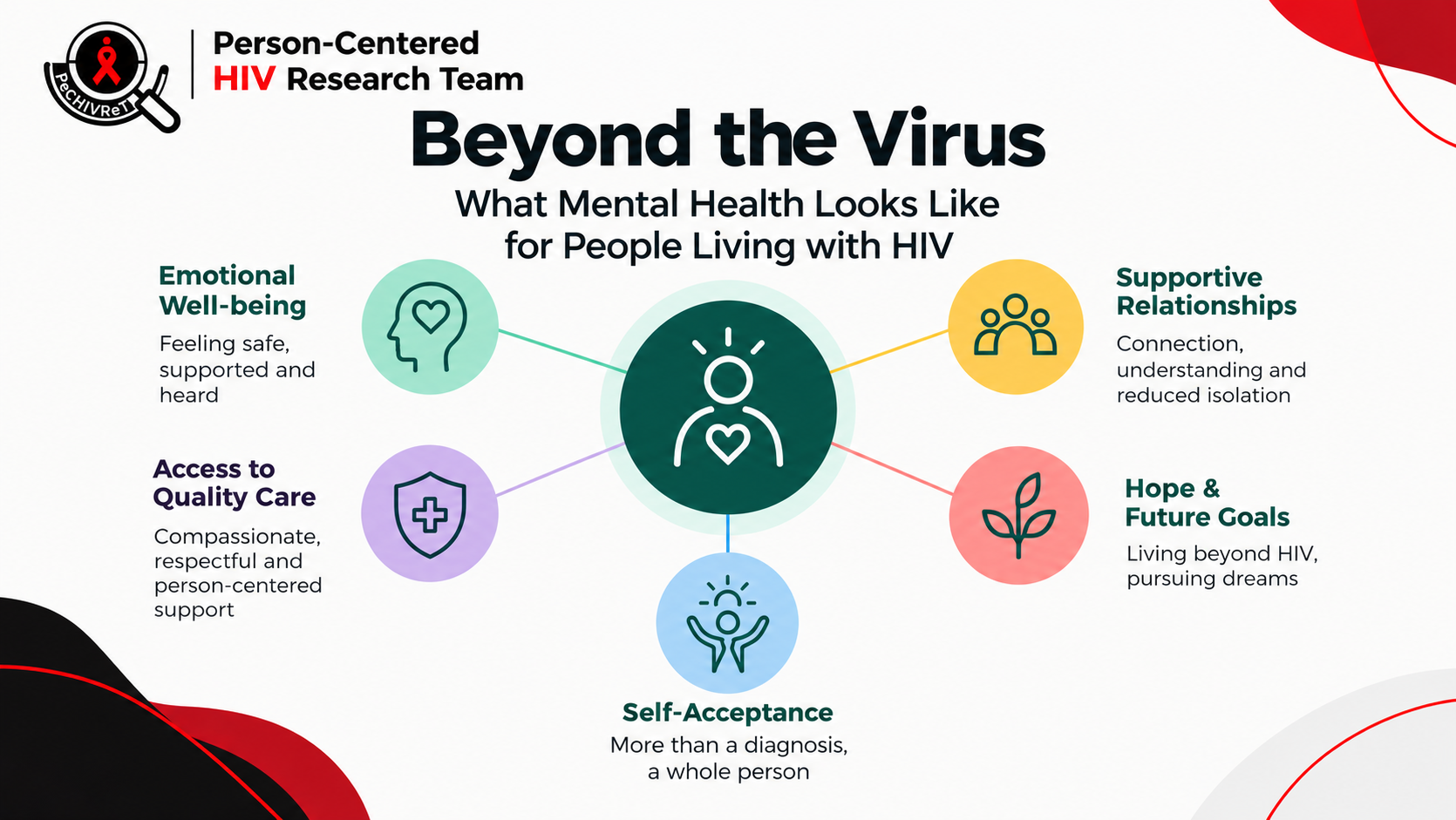
Beyond the Virus: Addressing Mental Health in People Living with HIV
HIV care has made remarkable progress over the years, and with access to effective antiretroviral therapy (ART), people living with HIV can live long, healthy lives.
Viral suppression remains a major achievement in the global HIV response, but it does not tell the whole story of a person's health and well-being.
For some people, living with HIV also means navigating the fear of disclosure, the weight of stigma, uncertainty about relationships, and the emotional impact of a diagnosis. Others may experience depression, anxiety, loneliness, or psychological distress at different points in their lives. These experiences are not universal, but they remind us that the needs of people living with HIV extend beyond clinical outcomes.
A person may be taking their medication consistently, attending clinic appointments, and maintaining an undetectable viral load while still struggling emotionally. If HIV services focus only on laboratory results and treatment adherence, important aspects of that person's well-being may remain unaddressed.
This raises an important question…
Are we doing enough to support the mental health of people living with HIV? OR Have we become so focused on controlling the virus that we sometimes overlook the person?
Understanding the mental health burden of HIV
A diagnosis of HIV can bring a range of emotional responses. For some, the initial period may involve shock, fear, sadness, or uncertainty about the future. Some may experience distress much later, perhaps following a difficult disclosure experience, a relationship breakdown, discrimination, or challenges with long-term treatment.
HIV-related stigma can intensify these experiences. Fear of being judged, rejected, or treated differently may lead people to conceal their status, withdraw from social relationships, or avoid seeking support. In settings where misconceptions about HIV persist, the burden of managing a health condition can become compounded by the pressure of navigating other people's attitudes.
The mental health challenges associated with HIV are also influenced by circumstances beyond the diagnosis itself. Financial insecurity, unstable housing, limited access to healthcare, gender-based violence, and inadequate social support can contribute to psychological distress. For some individuals, these challenges may overlap, creating barriers that are difficult to address through medical treatment alone.
The World Health Organization (WHO) recognizes the importance of addressing mental health conditions within HIV services. Its 2025 HIV service delivery guideline recommends integrating mental health care for depression, anxiety, and alcohol use disorders into HIV services.
These challenges should not, however, define every person's experience of HIV. People living with HIV have diverse experiences, strengths, relationships, and coping strategies. The goal is not to assume that everyone is struggling, but to ensure that anyone who needs mental health support can access it without stigma or unnecessary barriers.
The connection between mental health and HIV care
Mental health and HIV care are closely connected. Psychological distress can affect how a person engages with treatment, maintains relationships, makes decisions about their health, and navigates everyday life.
For someone experiencing depression, even routine activities can become difficult. Attending clinic appointments, collecting medication, maintaining a daily treatment schedule, or communicating with healthcare providers may require more effort. Anxiety and fear of disclosure may also influence decisions about when and where to access care.
This does not mean that every person experiencing a mental health condition will struggle with treatment adherence. Rather, it highlights why healthcare providers must consider the circumstances that shape a person's ability to engage with care.
WHO's 2025 guideline draws attention to the benefits of integrating mental health and HIV services. Its evidence review found that integrated approaches can reduce moderate-to-severe depression and may improve engagement in HIV care.
When mental health needs are identified and addressed, healthcare teams can offer support that responds to more than the clinical aspects of HIV. This may include counselling, psychological interventions, peer support, and referrals to appropriate mental health professionals.
Ultimately, supporting mental health is not separate from HIV care. It is an important part of delivering care that helps people maintain their overall health and quality of life.
Moving beyond a treatment-centered approach
For many years, HIV programs have rightly prioritized access to antiretroviral therapy, viral suppression, prevention, and retention in care. These remain essential priorities. However, a comprehensive approach to HIV must also recognize the psychological and social realities that influence how people experience healthcare.
A treatment-centered approach may ask whether a patient has collected their medication, attended their appointment, or achieved viral suppression. A person-centered approach asks these questions while also considering what might be happening in that person's life.
Does the individual feel safe discussing their concerns with a healthcare provider? Are they worried about someone discovering their HIV status? Do they have access to emotional support? Are financial difficulties, discrimination, or other life circumstances affecting their well-being?
These questions matter because healthcare experiences are shaped by more than the availability of services. People need care environments where they feel respected, understood, and able to discuss their needs without fear of judgement.
Mental health support should therefore not be treated as an optional addition to HIV services or something offered only when a crisis occurs. It should be incorporated into routine care, with appropriate assessment, referral pathways, confidentiality safeguards, and follow-up.
What does person-centered mental health support look like?
Addressing mental health in people living with HIV requires more than recognising that a problem exists. It requires healthcare systems and communities to create environments where people can access support that reflects their individual needs and preferences.
1. Integrating mental health into routine HIV services
HIV clinics provide an important opportunity to identify mental health concerns and connect people with appropriate care. Routine services can incorporate suitable mental health assessments, counselling, and referral pathways, supported by trained healthcare workers and clear clinical protocols. WHO's 2025 guideline specifically recommends integrating care for depression, anxiety, and alcohol use disorders into HIV services.
2. Addressing stigma and protecting confidentiality
Fear of discrimination can prevent people from discussing their emotional challenges or seeking help. Healthcare providers must maintain confidentiality, use respectful language, and ensure that people are not judged because of their HIV status or mental health concerns.
Beyond healthcare facilities, sustained community education is needed to challenge misconceptions and reduce HIV-related stigma. Creating supportive environments also means ensuring that people can seek mental health care without feeling compelled to disclose their HIV status to people they do not trust.
3. Strengthening peer and community support
Peer support can provide opportunities for people living with HIV to share experiences, build connections, and learn from others who understand some of the challenges they may face. Community-led organisations can also help people navigate services and access psychosocial support.
Such approaches should be voluntary, confidential, and responsive to individual preferences. Not everyone will want to participate in a support group, and that choice should be respected.
4. Recognizing that support must reflect individual circumstances
Mental health needs differ across age groups, social settings, and stages of life. Adolescents and young adults may face concerns about identity, relationships, disclosure, and acceptance. Older adults may experience different challenges associated with aging and long-term care. Some people may benefit from professional psychological services, while others may prefer peer support, community resources, or a combination of approaches.
Person-centered care recognizes these differences rather than assuming that a single intervention will work for everyone.
The role of research in closing the gap
Although the importance of mental health in HIV care is increasingly recognized, more work is needed to understand how effective and accessible support can be delivered across different settings.
Research can help identify unmet mental health needs, examine barriers to accessing support, and evaluate interventions that integrate psychological care into existing HIV services. It can also explore the experiences of people who may be underserved by current programs, including adolescents, young adults, and communities facing significant social or economic barriers.
Importantly, research must go beyond measuring the prevalence of mental health conditions. It should also investigate whether available services are acceptable to the people they are intended to serve, whether individuals can access them without discrimination, and whether interventions improve meaningful outcomes.
The experiences of people living with HIV must remain central to this process. Their perspectives can help researchers and healthcare providers understand which services are needed, how support should be delivered, and what changes would make care more responsive.
In resource-limited settings, these questions are particularly important. Integrating mental health support into existing HIV services may offer opportunities to reduce fragmentation, but implementation must account for local resources, workforce capacity, confidentiality, and access to appropriate referral services. WHO's guidance highlights the importance of coordinated, person-centered service delivery and provides recommendations intended to support implementation across different contexts.
In the Person-Centered HIV Research Team (PeCHIVReT), this represents an important opportunity to advance HIV research that considers the whole person. Going beyond the virus means seeing the person behind the diagnosis. It means building HIV services that do not simply help people live longer, but also support them in living well.
Advancing person-centred HIV research means continuing to ask how care can better reflect the realities of the people it serves because a truly comprehensive HIV response must address not only the virus, but also the mental, emotional, and social well-being of every person affected by it.
Want to learn more about our work? Explore our projects and presentations, or get in touch.