What Person-Centered Sexual Health Looks Like
Sexual health is often described as a list of services: HIV and STI testing, condoms, contraception, and treatment. These matter, but a list of services doesn't tell us whether people feel able to use them.
Someone can know exactly where a clinic is and still not go. They may worry about who will see them walk in. They may expect to be judged for their questions, their relationships, or their age. They may be unsure whether their information will stay private or whether they can afford the journey and what follows the visit. Across Nigeria and the wider sub-Saharan Africa region, access to sexual health services is shaped by far more than whether a clinic is open.
This is where person-centered care changes the picture. Instead of starting from what the health system offers, it starts from the person: their circumstances, their fears, their goals, and what a good outcome means to them.
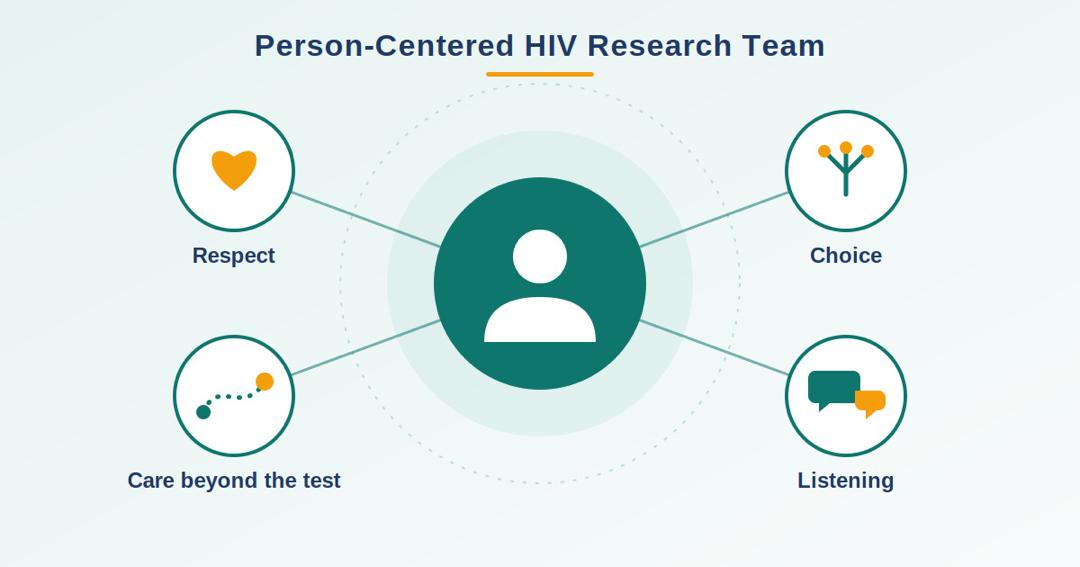
Person-Centered Sexual Health Begins With: Respect
Sexual and reproductive health is closely tied to dignity, relationships, and autonomy. A person-centered service treats people as partners in their own care, not as cases to be managed. That means non-judgmental conversations, clear information in plain language, and room to ask questions without embarrassment. HIV stigma, and stigma around STIs, sexuality, or simply being sexually active, can keep people away from care far more effectively than a lack of information.
Person-Centered Sexual Health Requires: Choice
People's needs differ, and so should the options. Some prefer to visit a clinic and speak to a health worker. Others value the privacy of HIV self-testing, the convenience of digital and telehealth services, or the familiarity of a community setting. Young people, in particular, often find conventional services hard to navigate, and the best way to learn what works for them is to involve them in designing it. Offering choices is not a luxury. It is often what separates someone engaging with care from someone staying away.
Person-Centered Sexual Health Continues Beyond: The Test
A test is not the end of the story. A person-centered approach to HIV and STI testing asks what happens next. Do people understand their results? Can they reach treatment, PrEP, counselling, or other support when they need it? Do they feel safe returning? Good HIV prevention and STI prevention depend on continuing relationships with care, not single appointments.
Person-Centered Sexual Health Must Weigh: New Prevention Tools
As interest grows in options such as lenacapavir, we have to ask how they are used in real settings, including poorly regulated ones, and what that means for individuals and for antimicrobial resistance. Putting people at the center means weighing benefits and risks honestly and making sure information and oversight keep pace with access.
Person-Centered Sexual Health Depends On: Listening
At PeCHIVReT, listening is part of how we do research. Involving the people and communities affected by HIV and STIs helps us ask better questions. Instead of asking only, Why aren't people using sexual health services? We ask, What makes this difficult for this person, and what would make it easier? The answers shape what we study and how we design interventions, and they guide how we share what we find.
Person-Centered Sexual Health Invites: Reflection
Person-centered sexual health isn't a single program or technology. It is a way of working that treats privacy, respect, choice, and continuity of care as essential parts of the service, not extras added afterwards.
We invite you to think about what makes a service feel safe to use. If you work in health, ask whether people would feel welcome walking through your door. If you are a researcher or student, ask whose voices are missing from your work. And if you are a member of the community, know that your experiences matter and that they can change how services are built.
Good sexual health begins with accurate information, but it grows where people feel respected, safe, and heard.
Want to learn more about our work? Explore our projects and presentations, or get in touch.