Reflections from the 26th International AIDS Conference (AIDS 2026)
A conference may last for a few days, but the work presented there should not end when everyone leaves.
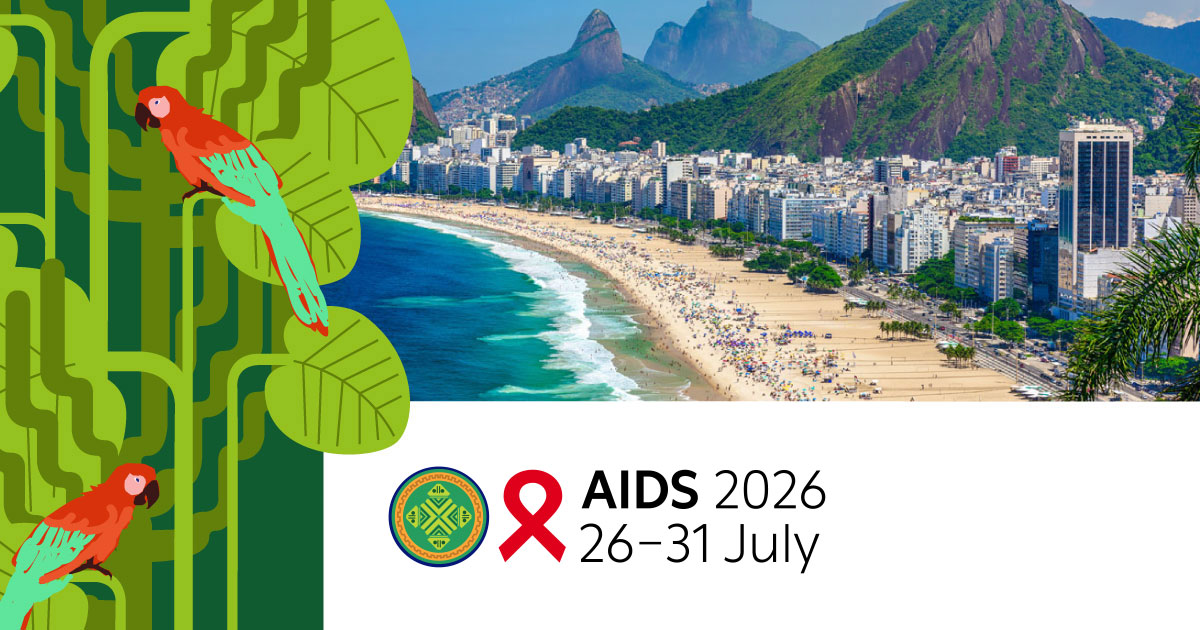
For the Person-Centred HIV Research Team, AIDS 2026 in Rio de Janeiro was an opportunity to share our work, listen to researchers and communities from around the world, and think more deeply about what it means to put people at the centre of HIV research.
This year, our team presented eleven abstracts covering a wide range of issues in HIV prevention, treatment, mental health, health economics, digital health and community engagement. Although the topics were different, they were connected by one question. How can research respond to the realities of the people and communities it is meant to serve?

Taking person-centred research to a global stage
Our eleven abstracts explored issues that affect people at different points in the HIV response. We looked at integrating mental health services into HIV care for adolescents and young people living with HIV, using artificial intelligence for digital mental health triage, violence and HIV risk among female sex workers, and machine learning approaches to re-engage children living with and affected by HIV.
Other studies examined the growing burden of diabetes among adults receiving antiretroviral therapy, the economic value of HPV vaccination, community-led approaches to antenatal care and HIV testing, willingness to pay for long-acting PrEP, the affordability of future HIV vaccines and cure-adjacent interventions, volunteer-led telehealth for HIV and STI prevention, dapivirine-levonorgestrel vaginal rings, and mpox vaccination hesitancy among people living with HIV.
These may sound like very different areas of research. But behind every topic are people making decisions about their health, navigating healthcare systems, managing stigma, considering whether they can afford a service, or deciding whether they feel safe enough to seek care.
That is why presenting this work at AIDS 2026 was important to us. It gave us an opportunity not only to present findings, but also to place the experiences behind those findings in a much larger conversation.
Our presenters, AbdulMuminu Isah, Lydia Efobi, Gabriel Ezenri, Ezinwanne Ugochukwu, Amauche Pearl Ngige and Somtochukwu Anierobi, represented the team across different sessions. Their presentations reflected the work of researchers, community partners and team members who contributed to the studies long before the conference began.
What we heard before the conference even began
Some of the most important conversations started before the official opening ceremony.
During the pre-conference sessions led by the International AIDS Society and the International Planned Parenthood Federation, discussions around HIV cure research reminded us that scientific progress cannot be separated from the communities it hopes to benefit.

One message stood out clearly. Communities need to be involved from the beginning of cure research, not brought in only when a scientific breakthrough is ready to be introduced.
The conversation also pushed us to think beyond the idea of a cure as simply a medical product. Healing can involve much more than removing a virus. It can also mean addressing stigma, fear and the social experiences that continue to affect people living with HIV.
The discussion around creative arts was another reminder that engagement does not always have to happen through traditional scientific communication. Film and other forms of storytelling can create spaces for people to understand, discuss and process difficult health experiences.
There were also important questions about how emerging HIV cure strategies will translate across different settings. A strategy developed in one part of the world may not automatically fit another. Factors such as HIV subtypes, healthcare systems, resources and community experiences all matter.
For a research team working in Nigeria, these are not abstract questions. They are questions that should influence how we design studies and think about implementation from the beginning.
Young people should not simply be invited into the conversation
Youth leadership and financing the AIDS response were also major themes during the pre-conference discussions.
One point came through strongly. Young people should not be treated as people who simply receive HIV programmes. They should have a role in deciding what those programmes look like.
This connects closely with our own approach to research.

Young people understand the language, platforms and social environments that shape how their peers think about health. They can identify barriers that may be missed when programmes are designed without them. They can also help create spaces where conversations about HIV testing, PrEP and sexual health feel less judgemental.
The message was simple. Youth speak. Leaders listen. We act together.
It is a message we want to carry beyond the conference.
When the numbers show what is possible
One of the studies presented at the conference looked at a volunteer-led telehealth model for HIV and STI prevention among young people in Southeastern Nigeria.

The findings gave us a practical example of what can happen when digital tools are designed around the way people actually seek care.
The telehealth model reached 3.1 times more people than facility-based outreach and delivered services at 42% lower cost per user, at approximately $4.90 per user. HIV testing uptake was also higher among those reached through the telehealth model, at 78.4% compared with 46.9% through facility-based outreach.
The difference in STI treatment was similarly striking. Within seven days, 79.1% of those in the telehealth model received treatment compared with 38.2% in the comparison group. Among people with reactive HIV self-tests, 91.6% were linked to confirmatory testing.
But perhaps the most important question is what these numbers mean outside the conference hall.
The study estimated that the intervention could avert 4.3 HIV cases per 1,000 users and 126 disability-adjusted life years per 100,000 young people reached. At $181 per DALY averted, the model was estimated to be around twelve times below the WHO highly cost-effective threshold for Nigeria.
In simple terms, the research suggests that digital, volunteer-led services can reach more young people while using resources efficiently.
This is especially important during periods when young people may be less likely to visit health facilities, such as festive seasons.
The next step is not simply to celebrate the results. It is to ask how models like this can be integrated into existing HIV prevention strategies and adapted for other communities.
Prevention is also an economic decision
Another important part of our representation at AIDS 2026 came through research presented by Ezinwanne Ugochukwu on HPV vaccination and future HIV vaccines.

The HPV vaccination study examined the value mothers living with HIV place on vaccinating their daughters. The findings showed strong demand for HPV vaccination, with a benefit-cost ratio of 17.6.
This matters because vaccination is sometimes discussed only in terms of the immediate cost of purchasing and delivering a vaccine. Economic research helps us look at the bigger picture.
Prevention has value because it can prevent illness, reduce future healthcare costs and protect people from conditions that may otherwise have serious consequences.
The study also showed differences in demand across groups, including higher demand among more educated respondents and in southern regions. These differences can help policymakers understand where additional information, access or targeted interventions may be needed.
The second study looked ahead to future HIV vaccines and cure-adjacent interventions. At prices of $5 to $15 per dose, emerging HIV vaccines could potentially be cost-effective and, in some scenarios, even cost-saving over time. The base-case analysis estimated $1,680 per QALY, below Nigeria's cost-effectiveness threshold.
The study also showed that how a future vaccine is distributed matters. Prioritising lower-income groups could increase equity gains by 18% without significantly increasing costs.

This gives us an important lesson. Economic evaluation should not be something considered after a health innovation has already been developed. Pricing, financing and equitable access need to be part of the conversation early.
A scientifically effective intervention that people cannot afford or access cannot achieve its full potential.
Making HIV prevention something people can participate in
Research is important, but how we communicate research matters too.
At the Global Village, our team hosted a session titled "Play to Prevent: Gamified HIV Prevention Learning Led by Youth and Communities."

The idea behind the session was straightforward. People may remember and understand health information better when they have the opportunity to work through realistic situations rather than simply listen to information being presented to them.
The session brought together discussions on youth leadership, creative approaches to prevention and scenario-based learning.
Participants worked through situations involving misconceptions about PrEP eligibility, possible HIV exposure within the 72-hour window, prevention education in low-resource settings and conversations with partners concerned about HIV transmission.
The aim was not to find a perfect answer or turn HIV prevention into a competition. Instead, participants were encouraged to think about whether their responses were accurate, practical, non-judgemental and connected to appropriate referral and support systems.
This is an approach we believe can travel beyond Rio.
A prevention game does not have to be complicated. What matters is whether it reflects the reality of the people using it. The next step is to continue developing these approaches, test them with communities and learn from their feedback.
Mental health cannot remain separate from HIV care
Perhaps one of the strongest examples of our person-centred approach came from the oral presentation by our Principal Investigator, AbdulMuminu Isah, during the "Minds matter: Mental health in HIV treatment and prevention" session.
The study addressed a problem that is often recognised but not always adequately addressed. Adolescents and young people living with HIV can experience depression and anxiety, and these challenges can affect adherence to treatment, retention in care and viral suppression.

The question was not simply whether mental health services are needed. It was whether they could be integrated into HIV care in a way that young people would actually accept and use.
The team co-designed the model with the young people it was intended to serve and implemented it across eight Nigerian HIV clinics over nine months.
At baseline, among 412 young people with a median age of 19, 38.2% screened positive for moderate-to-severe depression and 34.5% for moderate-to-severe anxiety.
After implementation, anxiety fell from 34.5% to 18.4%, while retention in care increased from 84.7% to 96.0%. The model was adopted across all eight clinics, screening uptake reached 93.7%, and young people rated its acceptability at 4.7 out of 5.
What makes this particularly interesting is how the intervention was delivered.
The model used trained youth peer researchers rather than requiring additional specialist mental health staff. This makes the approach more realistic for settings where specialist professionals are limited.
There is still room to improve. Digital self-help engagement was 68.9%, suggesting that this part of the model needs further adaptation before wider scale-up. The study was also a single-arm pre-post study without a concurrent comparison group, and the follow-up period was nine months.
Good research should make room for both what worked and what still needs to be improved.
For us, the larger message is that mental health should not be treated as an optional addition to HIV care. If mental health affects how young people remain in care and manage treatment, then mental health support belongs within the care pathway.
What happens after Rio?
It is easy for a conference to become a collection of photographs, presentation slides and certificates. We do not want AIDS 2026 to be that for us.
The real value of the conference will be seen in what we do with what we learned.
For the Person-Centred HIV Research Team, this means continuing to involve communities in research design, especially young people and groups whose voices are often missed. It means looking at how digital health can improve access without creating new barriers. It means considering cost and equity alongside clinical effectiveness. It means treating mental health as part of HIV care rather than a separate conversation.
It also means being willing to ask harder questions about our own work.

Will a programme still work when funding changes? Can a digital intervention reach people with limited internet access? Who might be left out of a new vaccine rollout? What happens when an intervention moves from a research setting into routine healthcare? Are young people still involved when decisions about scale-up are being made?
These are the questions that should follow us home.
AIDS 2026 also reminded us that research is a shared effort. Our work in Rio was possible because of the researchers, young people, clinicians, community partners and team members who contributed at different stages. Some travelled to the conference. Others supported from Nigeria and elsewhere.
We are grateful to everyone who helped make our eleven abstracts and Global Village session possible, including our presenters and the wider Person-Centred HIV Research Team.
We are also grateful to the International AIDS Society, the speakers, researchers, advocates, community leaders and people living with HIV who shared their knowledge and experiences throughout the conference.
Rio may have marked the end of AIDS 2026, but for us, it is also a starting point.
We return with new questions, new ideas and new connections. More importantly, we return with a stronger reminder that research only reaches its full value when it can improve real lives.
The conference is over.
The work continues.
Rethink. Rebuild. Rise.